Published
- 2 min read
Bear Paw
Overview
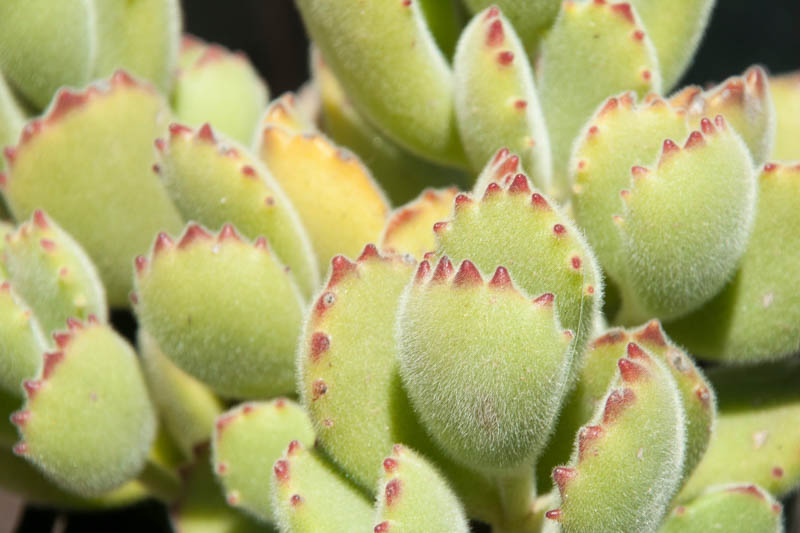
Cotyledon tomentosa, commonly known as Bear Paw, is a distinctive succulent recognized for its thick, velvety leaves with red-tipped “claws” at the edges. The soft fuzz covering the leaves helps reduce water loss and gives the plant its characteristic plush appearance. It grows in a compact, branching form rather than a tight rosette, making it visually different from many common succulents.
Light Requirements
Bear Paw prefers strong light to maintain its compact growth and coloration:
- Ideal condition: Bright light to full sun
- Indoor growing: South or west-facing windows
- Direct sun: Tolerates several hours of sun; enhances red tips
- Low light effects: Stretching, pale color, loss of compact shape
Watering Schedule
This plant is drought-tolerant and sensitive to overwatering:
- Growing season (Spring/Summer): Water every 2–3 weeks
- Dormancy (Fall/Winter): Water every 3–4 weeks
- Overwatering: Causes rot quickly due to dense, fuzzy leaves
- Watering method: Soak thoroughly, then allow complete drying
- Test: Soil must be fully dry before watering
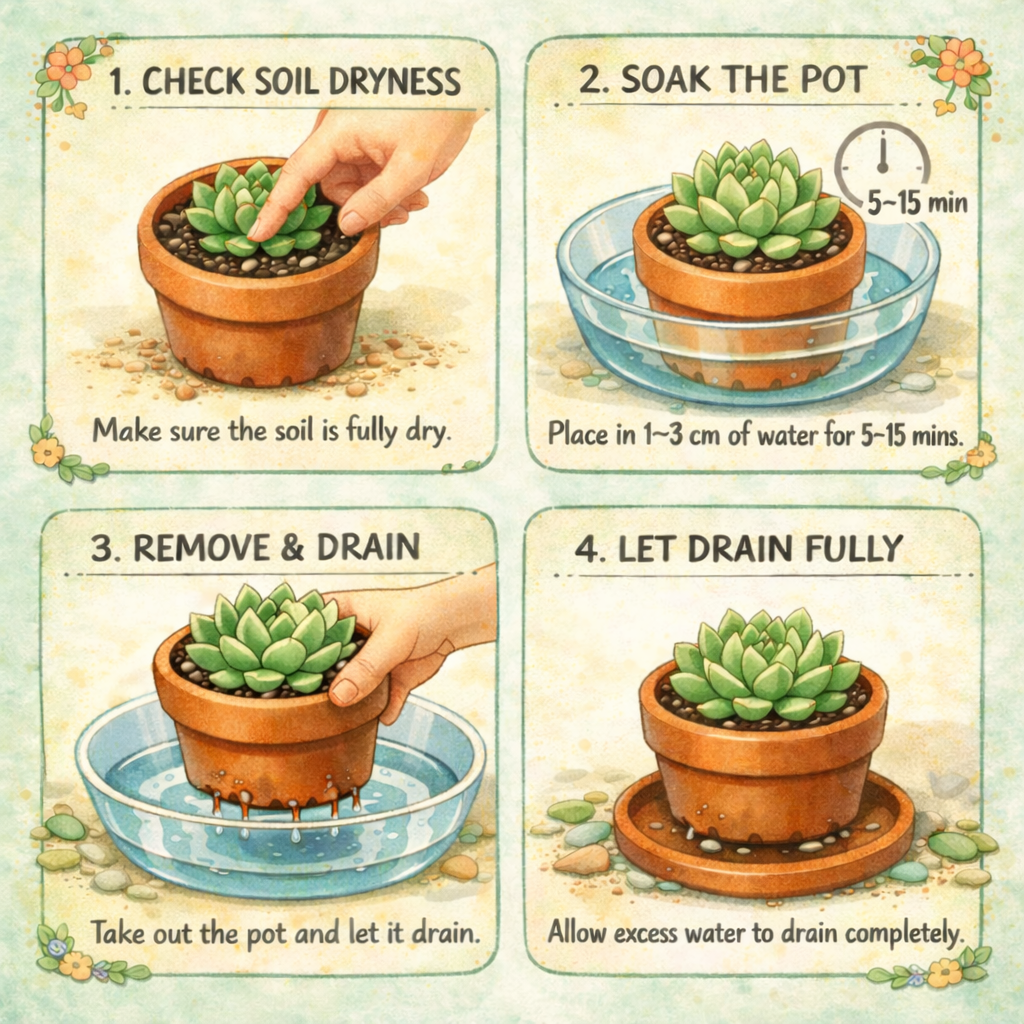
- Best watering method: Bottom watering is recommended. Place the pot in 1–3 cm of water for 5–15 minutes, then remove and allow excess water to drain completely
Soil Requirements
Fast-draining soil is essential:
- Best option: Cactus or succulent mix
- DIY mix: Potting soil + 50% perlite or pumice
- Drainage: Must dry quickly to prevent root rot
- Pot: Terracotta recommended for airflow
Temperature & Humidity
- Ideal temperature: 60–80°F (15–27°C)
- Minimum temperature: ~40°F (5°C, avoid frost)
- Humidity: Low humidity preferred
- Outdoor zones: USDA 9–11
Propagation
Propagation is straightforward:
- Stem cuttings: Most reliable method
- Leaf propagation: Possible but less consistent
- Rooting time: 2–4 weeks
- Difficulty: Easy
Common Issues
- Rot: Most common issue due to excess moisture
- Leaf drop: Caused by overwatering or stress
- Sunburn: Scorching under sudden intense light
- Pests: Occasional mealybugs
Tips
- Avoid getting water on leaves to prevent rot
- Increase light gradually to enhance red claw tips
- Do not mist; keep foliage dry
- Ideal as a display plant due to its unique texture