Published
- 3 min read
Echeveria
Overview
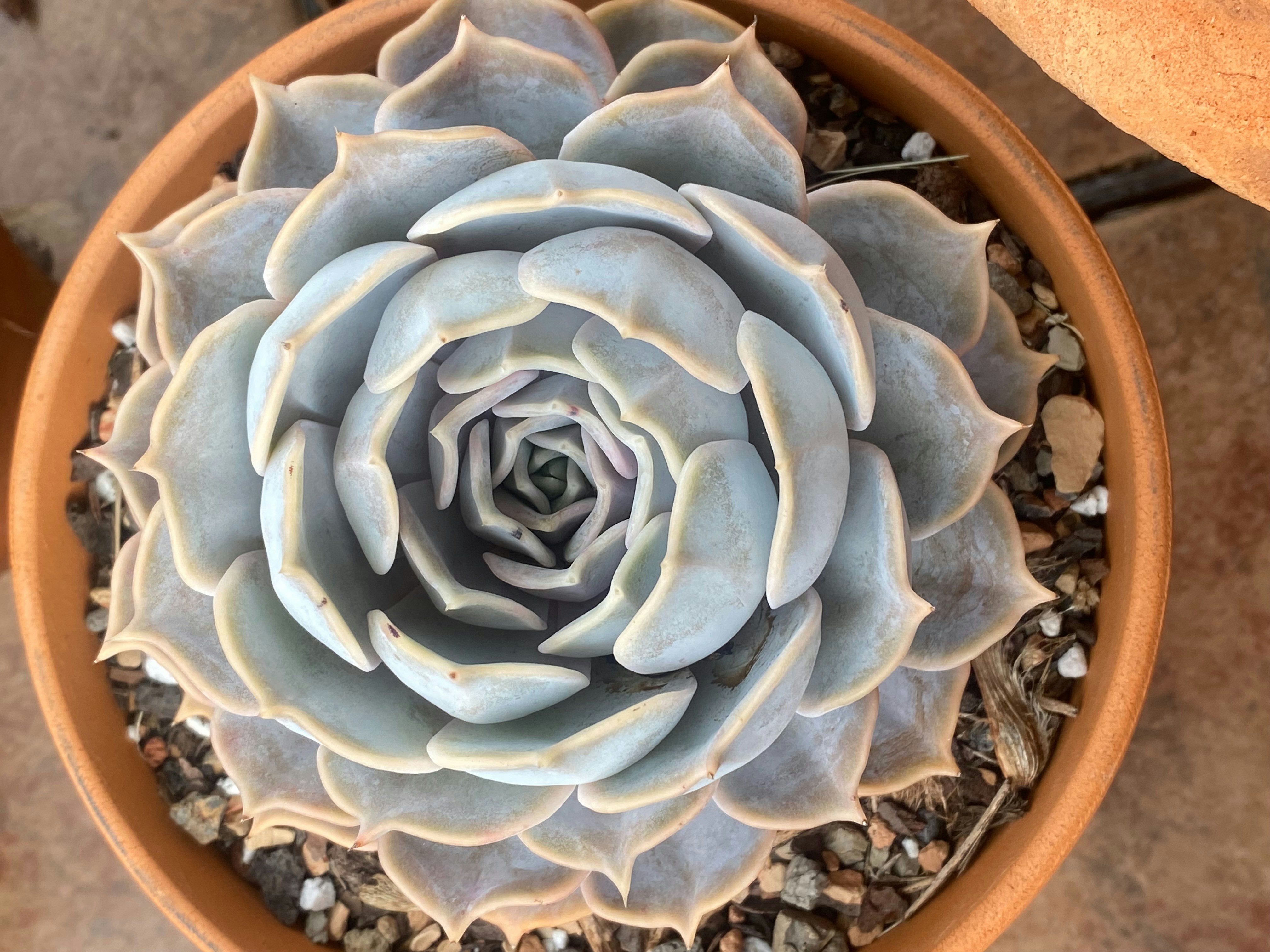
Echeveria is a genus of succulent plants that form beautiful rosette shapes. They’re prized for their geometric forms and often display stunning color gradients—from blues and purples to pinks and reds. These plants are some of the most photogenic succulents and are perfect for container gardens and as gifts.
Light & Color
Echeveria colors are directly influenced by light exposure:
Bright Conditions
- Colors intensify dramatically with more sunlight
- Pink, purple, and red hues develop with strong light
- Requires 6+ hours of direct sunlight daily for best coloring
Low Light
- Plants remain green and may become pale
- Growth becomes weak and stretched (etiolated)
Outdoor vs Indoor
- Outdoor plants display the most vibrant colors
- Indoor plants near south-facing windows show good color
- Artificial grow lights can supplement natural light
Watering Guide
Echeveria stores water in their leaves, so they need less water than you might think:
- During growth (Spring/Summer): Water every 2-3 weeks
- During dormancy (Fall/Winter): Water every 4-6 weeks or reduce to almost nothing
- Method: Water thoroughly until it drains, then allow soil to dry completely
- Sign of overwatering: Translucent, mushy leaves
Soil & Potting
- Use fast-draining succulent or cactus soil
- Add perlite (30%) to standard potting mix for better drainage
- Use shallow pots (2-3 inches deeper than the rosette height)
- Ceramic or terra cotta pots help soil dry faster
Temperature Requirements
- Ideal range: 15-25°C (59-77°F)
- Winter dormancy: Most species prefer cooler winters (10-15°C) to encourage compact growth and flowering
- Frost tolerance: Most varieties die below 4°C (39°F)
- Heat tolerance: Can handle 30°C+ (86°F+) if watered carefully
Flowering
One of the joys of growing Echeveria is their flowers:
- Flowers appear in spring, typically on mature rosettes
- Colors range from pink, red, orange, and yellow
- Each rosette flowers only once, then produces offsets
- Flowering is encouraged by cooler winter temperatures
Propagation
Echeveria propagates easily through multiple methods:
Leaf Propagation
- Gently remove a healthy leaf from the mother plant
- Let the wound dry for 2-3 days
- Place on moist soil
- Keep soil slightly moist until tiny rosettes form (2-4 weeks)
- Gradually reduce watering as plants establish
Offset Division
- Many species produce baby rosettes (pups) around the base
- Once pups are 1-2 inches tall, gently separate them
- Let wounds dry for a day
- Plant in well-draining soil
Seed Propagation
- More challenging but rewarding
- Sow seeds on moist, sterile soil
- Cover with plastic to maintain humidity
- Germination takes 7-21 days at 20-25°C
Common Issues
Rot
- Caused by overwatering or poor drainage
- Solution: Improve soil drainage, reduce watering, remove affected leaves
Etiolation (Stretching)
- Caused by insufficient light
- Solution: Move to brighter location or add grow lights
Pests
- Mealybugs occasionally appear
- Treat with neem oil or remove with tweezers
Extra Care During Seasons
Spring
- Increase watering as growth begins
- Feed with diluted succulent fertilizer
- Prepare for flower display
Summer
- Maintain consistent watering
- Provide afternoon shade if temperature exceeds 30°C
- Watch for pests
Fall
- Gradually reduce watering
- Stop fertilizing
- Cooler temperatures trigger dormancy
Winter
- Minimal watering (soil can stay nearly dry)
- Cool temperatures (10-15°C) are beneficial
- Reduce to once monthly or stop fertilizing
Display Ideas
- Plant multiple varieties in a shallow container for a “succulent garden” effect
- The geometric rosette shape is perfect for modern minimalist displays
- Near windows where their colors can truly shine
- In terrariums (though moisture control is critical)
- As focal points in rock gardens or desert-themed arrangements
Interesting Varieties
- Echeveria elegans: Classic pale blue-green
- Echeveria pulvinata: Red and fuzzy “Red Velvet” variety
- Echeveria laui: Rare, beautiful pale blue with waxy coating
- Echeveria runyonii: Large, dramatic variety with silver-blue tone
Final Notes
Echeveria thrives on neglect—literally. The key to success is light, excellent drainage, and restraint with watering. With proper care, your Echeveria will grow into a stunning rosette and eventually produce a mini garden of beautiful clones. Enjoy your colorful companion!