Published
- 2 min read
Graptoveria Purple Hybrid
Overview
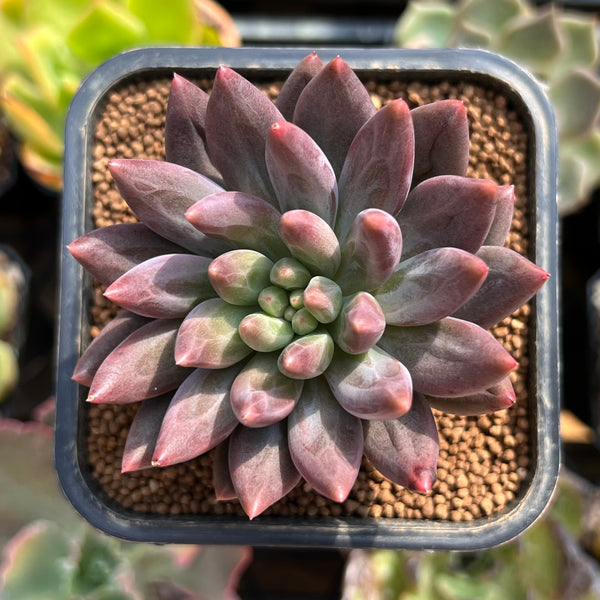
Graptoveria Purple Hybrid refers to a group of succulents derived from crosses between Graptopetalum and Echeveria species. These plants form compact rosettes with thick, slightly pointed leaves covered in a fine powdery coating. Their coloration ranges from muted gray-purple to deep burgundy depending on light intensity and environmental conditions. Due to extensive hybridization, many plants in this group do not have a stable or widely recognized cultivar name.
Light Requirements
Strong light is essential for maintaining shape and coloration:
- Ideal condition: Bright light to full sun
- Indoor growing: South or west-facing windows
- Color response: Increased light intensifies purple and red tones
- Low light effects: Stretching, greener color, loose rosette
Watering Schedule
These plants prefer a dry cycle and are sensitive to excess moisture:
- Growing season (Spring/Summer): Water every 2–3 weeks
- Dormancy (Fall/Winter): Water every 3–4 weeks
- Overwatering: Leads to root rot and leaf loss
- Watering method: Soak thoroughly, then allow complete drying
- Test: Soil must be fully dry before watering
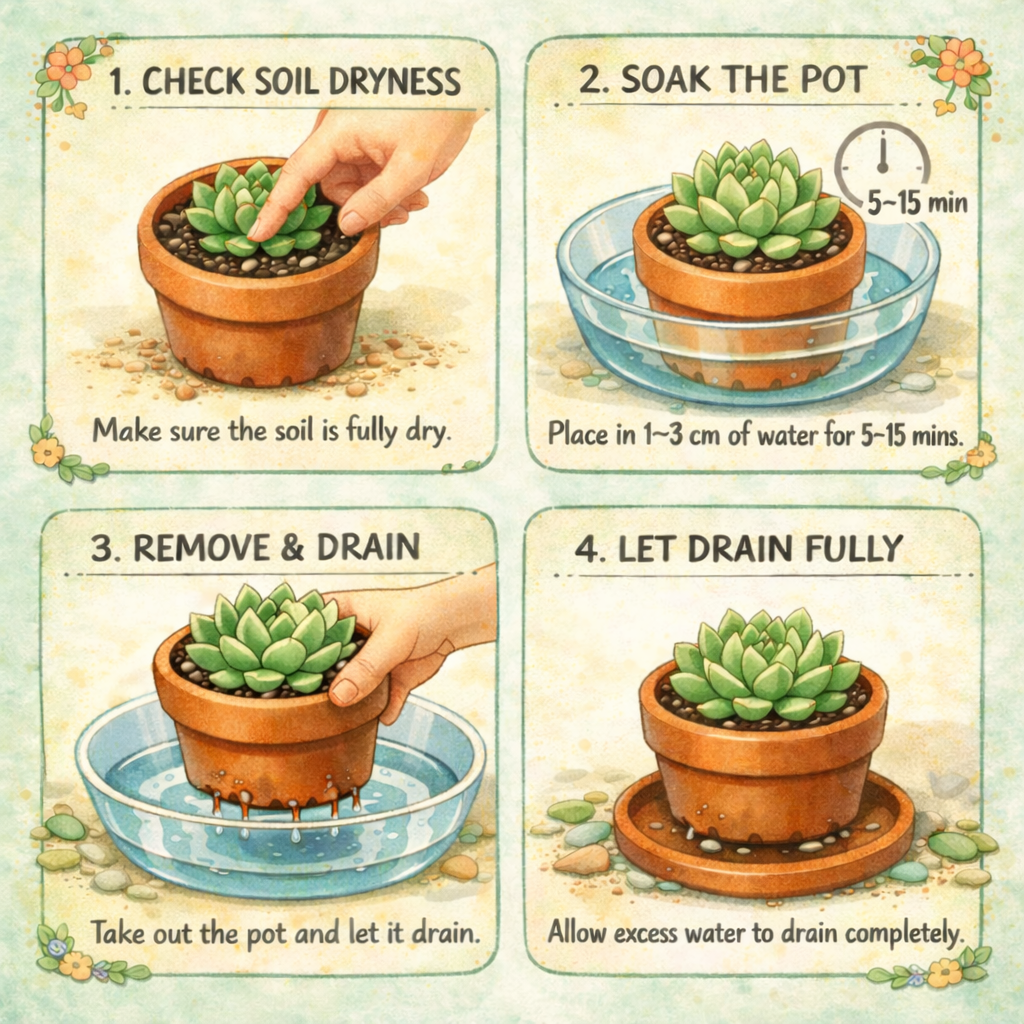
- Best watering method: Bottom watering is recommended. Place the pot in 1–3 cm of water for 5–15 minutes, then remove and allow excess water to drain completely
Soil Requirements
Fast-draining soil is critical:
- Best option: Cactus or succulent mix
- DIY mix: Potting soil with at least 50% perlite or pumice
- Drainage: Must dry quickly to prevent rot
- Pot: Terracotta recommended for airflow
Temperature & Humidity
- Ideal temperature: 60–80°F (15–27°C)
- Minimum temperature: ~40°F (5°C, avoid frost)
- Humidity: Low humidity preferred
- Outdoor zones: USDA 9–11
Propagation
Propagation is easy and reliable:
- Leaf cuttings: High success rate
- Offsets: Naturally forms clusters over time
- Stem cuttings: Root quickly
- Difficulty: Easy
Common Issues
- Etiolation: Caused by insufficient light
- Rot: From overwatering or poor drainage
- Leaf drop: Can occur under stress or handling
- Pests: Mealybugs and aphids
Tips
- Gradually increase light exposure to enhance color without burning
- Avoid frequent contact with leaves to preserve the powdery coating
- Ensure good airflow to reduce moisture retention
- Expect variation in appearance due to hybrid nature