Published
- 5 min read
Lithops
Overview
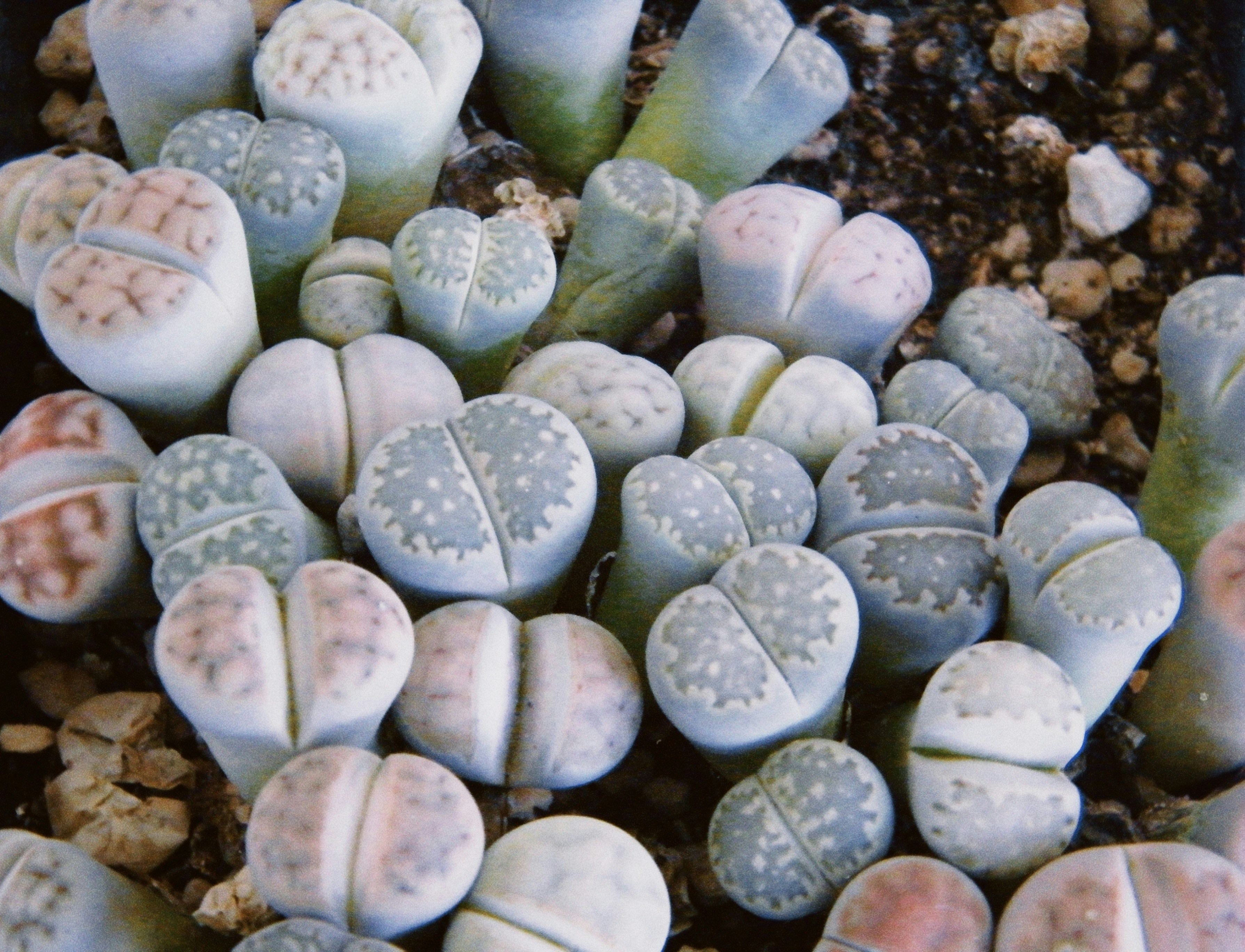
Lithops, commonly called “Living Stones,” “Pebble Plants,” or “Split Rocks,” are perhaps the most fascinating and unusual succulents. These extraordinary plants perfectly mimic the stones in their native South African habitat, both in appearance and in their unique reverse-seasonal growth cycle. Each plant consists of two fleshy, lobed leaves that resemble river pebbles, with a flowering slit between them. Growing Lithops is like keeping tiny living sculptures that bloom with surprising beauty.
Unique Growing Cycle
Lithops follow an inverted seasonal pattern completely different from most plants:
Growing Season: Fall/Winter
- This is when Lithops is most active
- They absorb water, grow, and flower during cooler months
- Dormancy in your “summer” is their “winter”
Dormant Season: Spring/Summer
- Lithops rest during your warm months
- They appear dormant and shriveled
- This is completely normal and desirable
- They survive on stored water from fall/winter
Key Difference: While other plants grow in spring/summer, Lithops does the opposite!
Light Requirements
Lithops need abundant light to thrive:
- Essential: Full sun (6+ hours daily at minimum)
- Ideal: 8+ hours of direct sun
- Indoor: South-facing windowsills only (very bright)
- Outdoor: Perfect for sunny rock gardens, patios
- Insufficient light: Plant will stretch, won’t flower, and may rot
- Critical: Light is even more important than for typical succulents
Watering Schedule
This is where Lithops differs dramatically from other succulents:
Growing Season (Fall/Winter)
- This is when you water regularly
- Water every 2-3 weeks during their active season
- Keep soil consistently moist (not wet)
- This mimics their natural fall/winter rains at home
Dormant Season (Spring/Summer)
- STOP WATERING ALMOST COMPLETELY
- Provide only minimal water if leaves completely shrivel
- They’ll look shriveled and dormant—this is healthy
- No water = no rot, no problems
- One light watering in mid-summer is optional
Transition Periods
- Late summer: Gradual reduction in watering
- Early fall: Begin slightly increasing water
- Early spring: Gradually reduce watering toward dormancy
Soil Requirements
Excellent, fast-draining soil is absolutely critical:
- Mix: 70% cactus/succulent soil + 30% coarse sand or perlite
- Alternative: Use extra-fast-draining cactus soil with added grit
- Drainage: Must be excellent; poor drainage = guaranteed rot
- Pot: Terra cotta preferred (helps soil dry faster)
- Depth: Shallow pots are suitable
- Annual refreshing: Repot yearly in late summer with fresh soil
Growth Pattern
- Size: Typically 1-1.5 inches (2.5-4 cm) wide
- Numbers: Usually 2-4 pairs of leaves in a mature plant
- Growth rate: Very slow; takes years to develop multiple heads
- Form: Two fleshy lobes forming a rounded top
- Color patterns: Varies greatly by species—green, tan, red, pink, purple, with darker markings and patterns
The Remarkable Flowering
Lithops’ flowers are their showstopper:
- Bloom time: Fall to early winter (during their growing season)
- Flower appearance: Bright daisy-like blooms (1-2 inches diameter)
- Flower colors: Yellow, pink, orange, or white
- Duration: Individual flowers last only a day
- Succession: Flowers bloom in succession over several weeks
- Amazing fact: Flowers emerge from the slit between the two lobes
- Reward: Proper care = prolific flowering; neglect = no flowers
Propagation
Lithops can be propagated but it requires patience:
Offset Division
- Mature plants produce multiple heads over years
- Once plant has 3-4 pairs of lobes, gently separate
- Let wounds dry for 1-2 days
- Plant in well-draining soil
- Water sparingly until established
Seed Propagation
- Collect seeds from faded flowers
- Sow on moist soil indoors
- Provide bright light
- Cover with plastic wrap to maintain humidity
- Germination very slow (2-4 months)
- Keep seedlings barely moist
- Takes 3-4 years until first flowering
Challenge: Propagation is slow; most growers collect different species rather than propagate
Seasonal Care Chart
| Season | Activity | Water | Light | Temperature |
|---|---|---|---|---|
| Spring | Dormancy begins | Very little | Full sun | Warm, can tolerate heat |
| Summer | Deep dormancy | None (stop!) | Full sun | Very warm |
| Fall | Growth begins | Resume regular | Full sun | Cooling down |
| Winter | Peak growth & flowering | Regular schedule | Full sun | Cool to cold |
Stunning Plant Varieties
Each species has unique characteristics:
- L. marmorata: Beige with intricate dark patterns
- L. aucampiae: Brown with geometric designs
- L. fulviceps: Golden with delicate lines
- L. pseudotruncatella: Pale with green tops
- L. karasmontana: Windowpane variety with translucent areas
- L. jucci: Clustered growth form
Common Problems & Solutions
Rot During Growing Season
- Cause: Overwatering or poor drainage
- Solution: Repot in ultra-fast-draining soil; reduce watering
- Prevention: Use gritty soil mix; don’t overwater
No Flowering
- Cause: Insufficient light (most common)
- Solution: Move to brightest possible location
- Note: Needs day-length and cool nights in fall/winter
Plant Doesn’t Look “Right” in Summer
- This is normal! They’re supposed to look shriveled during dormancy
- Don’t water trying to “help” it
- New growth will emerge in fall
Soft, Mushy Texture
- Cause: Watering during dormancy period
- Solution: Stop water immediately; repot if necessary
- Prevention: Follow opposite seasonal watering schedule
Plant Splitting Into More Heads
- Usually positive: Means it’s reproducing
- Can be problematic: If splitting too much, separate in late summer
- Individual heads: Can be grown separately after separation
Pests
- Rare indoors due to growing conditions
- Mealybugs possible (treat with neem oil)
- Root rot from pests unlikely if drainage good
Special Considerations
Mimicry Excellence
- In nature, Lithops hide in soil level with rocks
- Their flat top appearance helps them blend in
- Some collectors pot them flush with soil surface to recreate this
Light Requirements Critical
- More light-dependent than almost any other succulent
- Insufficient light results in:
- Etiolation (stretching)
- Failure to flower
- Rot problems
- Plant death
Patience Required
- Propagation from seed: 3-4 years to first flower
- Growth is very slow
- Reward worth the wait: unique plants and stunning blooms
Community & Collecting
- Active hobbyist community
- Collectors often focus on Lithops exclusively
- Numerous species and cultivars to explore
- Plant societies dedicated to species information
Indoor vs Outdoor Growing
Indoor
- Requires extremely bright south-facing window
- Grow lights highly recommended
- More challenging than outdoor growing
- Humidity should be low
- Excellent for winter blooming display
Outdoor (Zones 10-11)
- Perfect for desert gardens, rock gardens
- Protected location in colder zones
- Bring inside before freezing temperatures
- Can be left outdoors year-round in appropriate climates
- Most reliable flowering
Final Notes
Lithops are not for everyone—they require understanding of their unique reverse-seasonal cycle and uncompromising light requirements. However, for dedicated growers willing to meet their needs, they offer unparalleled rewards: strange, fascinating plants that truly resemble the stones they mimic, and spectacular autumn flowers as a bonus. If you can provide bright light, follow their opposite seasonal watering schedule, and appreciate slow-growing botanical oddities, Lithops will bring unique character to your collection. Expect patience, embrace the unconventional, and prepare to be amazed by nature’s perfect stone mimics!