Published
- 5 min read
String of Buttons
Overview
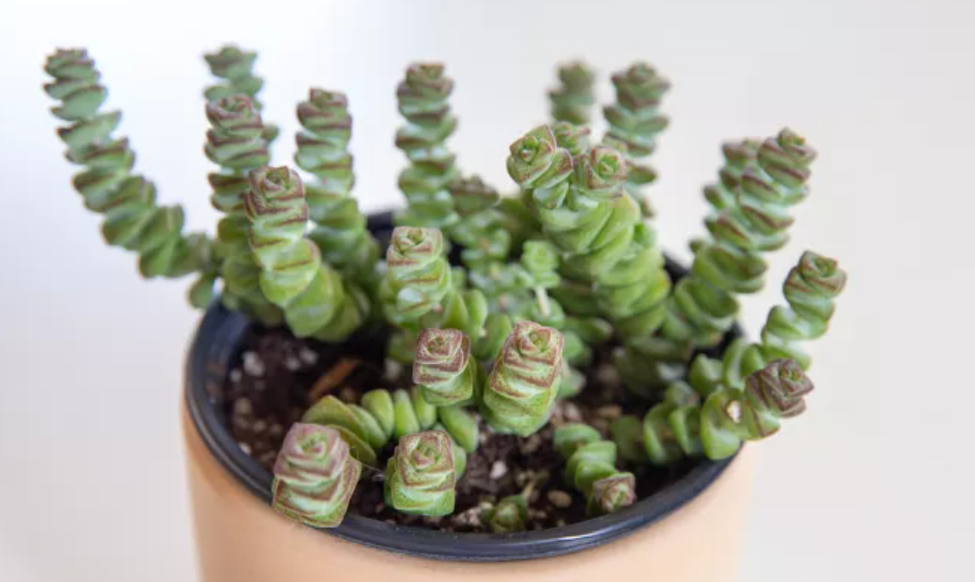
String of Buttons (Crassula perforata), also called “Necklace Plant” or “Stacked Crassula,” is an enchanting trailing succulent that looks like delicate coins stacked on a thread. The leaves are perfectly aligned along thin stems, creating an intricate, almost architectural appearance. This unique plant is excellent for hanging baskets, shelves, and as a cascading accent in mixed plantings.
Light Requirements
While more adaptable than some succulents, String of Buttons still needs good light:
- Ideal: Bright, indirect light (3-4 hours daily)
- Direct sun: Can handle some morning sun, but afternoon shade is beneficial
- Indoor: Near east or west-facing windows work well
- Outdoor: Bright shade or dappled sunlight
- Low light: Becomes sparse and etiolated; loses compact form
- Color variations: Can develop reddish hues with more light
Watering Schedule
String of Buttons needs more frequent watering than typical succulents:
- Growing season (Spring/Summer): Water every 2 weeks
- Dormancy (Fall/Winter): Water every 3-4 weeks
- Soil moisture: Keep slightly moist but never waterlogged
- Method: Water when top inch of soil feels dry
- Overwatering signs: Transparent/mushy leaves or soft stems
- Underwatering signs: Shriveled leaves or sparse growth
Soil Requirements
- Mix: High-quality succulent or cactus soil
- Amendment: Mix in 20-30% perlite for extra drainage
- Depth: Shallow to medium pots are ideal
- Drainage: Essential to prevent root rot
- Repotting: Every 2 years in spring
Growth Pattern
- Trailing length: Can reach 12-18 inches (30-45 cm) with mature growth
- Leaf arrangement: Two rows of leaves creating geometric pattern
- Growth rate: Moderate in bright conditions
- Leaf size: Small, rounded, overlapping like coins
- Stem thickness: Very thin and delicate
- Pruning: Can be trimmed to encourage branching
Propagation
String of Buttons propagates easily from leaves or stem segments:
Leaf Propagation
- Gently remove individual leaves
- Let dry for 2-3 days
- Place on moist soil
- Keep soil slightly moist (more so than typical succulents)
- Tiny rosettes form within 2-3 weeks
- Water as normal once established
Stem Propagation
- Cut 1-2 inch stem segments
- Allow to dry for 1-2 days
- Plant directly in soil
- Water lightly, keeping soil barely moist
- Rooting occurs within 1-2 weeks
- New growth appears shortly after
Tip: This plant propagates readily, so save every dropped leaf!
Flowering
String of Buttons produces delicate flowers:
- Bloom time: Late spring to early summer
- Flower color: Cream-white, sometimes tinged pink
- Flower clusters: Small stars arranged in terminal clusters
- Duration: Flowers last several weeks
- Frequency: Blooms regularly on mature plants
Arrangement & Display
This plant’s unique form shines in specific arrangements:
Hanging Baskets
- Perfect for showcasing the trailing, stacked leaf pattern
- Cascades beautifully from elevated positions
- Pairs well with upright or mounding succulents
Shelf Display
- Position on high shelves where growth hangs over edge
- Creates visual interest and draws the eye
Mixed Containers
- Use as trailing element in mixed succulent gardens
- Delicate appearance complements larger-leafed plants
- Softer aesthetic compared to bold succulents
Fairy Gardens & Terrariums
- Perfect scale for miniature landscapes
- Needs good air circulation
- Monitor moisture carefully
Seasonal Care
Spring
- Increase watering frequency as growth accelerates
- Provide bright light; move closer to windows
- Feed monthly with diluted succulent fertilizer
- Prime time for propagation
- New growth is vigorous
Summer
- Maintain consistent watering schedule
- Provide afternoon shade in very hot climates
- Growth continues steadily
- Flowering may occur
- Watch for any signs of stress
Fall
- Gradually reduce watering
- Growth slows noticeably
- Flowering may continue into early fall
- Stop fertilizing
- Prepare for dormancy
Winter
- Minimal watering (every 3-4 weeks or less)
- Cool temperatures encourage dormancy
- Growth essentially stops
- Keep in bright location if possible
- Very little care needed
Common Problems & Solutions
Sparse or Thin Growth
- Cause: Insufficient light
- Solution: Move to brighter location
- Prevention: Ensure 3-4 hours of bright light daily
Mushy Stems or Rot
- Cause: Overwatering or poor drainage
- Solution: Repot in fresh, dry soil; reduce watering immediately
- Prevention: Allow soil to dry between waterings
Shriveled Leaves
- Cause: Underwatering (unlike most succulents)
- Solution: Increase watering frequency slightly
- Note: This plant prefers more moisture than typical succulents
Slow or No Growth
- Causes: Low light, cold temperatures, or under-watering
- Solution: Optimize all three conditions
- Patience: Growth can be slow in low light
Leaf Drop
- Causes: Rapid temperature changes, drafts, or neglect
- Solution: Stable environment and consistent care
- Fallen leaves: Can be propagated
Pests
- Mealybugs and spider mites occasionally appear
- Treat with neem oil or insecticidal soap
- Inspect frequently due to delicate nature
Unique Characteristics
- Geometric precision: The stacked leaf arrangement is fascinating
- Delicate appearance: Looks fragile but is surprisingly sturdy
- Slow establishment: Takes patience to develop full cascades
- Resilient: Recovers well from propagation
- Flexibility: Can be trained to grow in different directions
Comparison to Related Plants
| Feature | String of Buttons | String of Pearls | String of Bananas |
|---|---|---|---|
| Leaf shape | Coins (flat) | Pearls (round) | Bananas (curved) |
| Growth rate | Moderate | Slow | Moderate |
| Water needs | Moderate | More tolerant | Very drought-tolerant |
| Light needs | Flexible | More adaptable | Bright light preferred |
| Difficulty | Easy | Easy | Easy |
Interesting Facts
- The geometric leaf arrangement along the stem is called “decussate” and creates a visually striking pattern
- This plant’s scientific name, perforata, refers to leaf sheaths that appear to perforate the stem
- In some varieties, the leaves appear to spiral around the stem, enhancing the optical effect
Styling Tips
- Height advantage: Display where cascading growth is visible
- Contrast: Pair with dark-leafed or bold-textured plants
- Container style: Metallic or modern pots complement the geometric form
- Grouping: Create interest by hanging multiple pots at varying heights
- Backlighting: Position where light shines through delicate stems
Final Notes
String of Buttons is for plant lovers who appreciate botanic art. Its perfectly arranged leaves create architectural interest that makes it a conversation starter. While it requires slightly more attention to watering than typical succulents, it’s still very forgiving and rewarding. The key to success is bright light, proper moisture balance, and the patience to watch it develop into a fully mature, cascading specimen. With care, you’ll have a unique conversation piece that showcases nature’s geometric beauty!