Published
- 6 min read
The Firewood Theory, and Its Two Inferences
Origin: Studying for the Certification
The origin of this theory traces back to around 2017, when I was preparing for the intermediate accounting certification.
Looking back, that period left a deep impression on me. No one forced me to take the exam. I had no financial or life pressure. But I felt lost, uncertain about my future, very similar to how I felt in 2022. Reflecting on it now, I realize that in both of these phases, I did the same thing: when faced with uncertainty, I chose to study seriously. The only difference was the subject, accounting in 2017, English in 2022.
The intermediate accounting certification exam consists of three subjects: Accounting Practice, which focuses on how to handle and record common business transactions; Financial Management, which involves calculations such as annuities and time-based value changes; and Economic Law, which covers legal frameworks. The requirement is to pass all three within two consecutive years. Each subject is scored out of 100, with 60 as the passing mark.
When writing this, I checked the historical data:
-
2018: 1.354 million candidates, 11.82% pass rate
-
2019: 1.6 million candidates, 13.13% pass rate
-
2020: 1.824 million candidates, 13.72% pass rate
-
2021: 2.141 million candidates, 12.7% pass rate
-
2022: 2.09 million candidates, 12%
Compared to the CPA exam, which has an average pass rate of around 25%, this certification appears significantly more difficult. However, this is misleading. A large portion of registered candidates never actually attend the exam, with absentee rates often around 40%.
The preparation process itself was long and uneven. Between 2013 and 2016, I repeatedly failed, often without even studying seriously. In 2016, I finally made a real effort, even attending night classes, but still failed. That failure hit hard.
Looking back, it was inevitable. I had not truly understood the concepts. I was studying for the exam, not for knowledge.
During this period, my emotions fluctuated constantly. These types of post-school exams share common traits: they occur once a year, require self-discipline, involve large volumes of material, and provide little immediate feedback.
At one point, I encountered an analogy: preparing for such an exam is like washing clothes in a dark room. You cannot see whether the clothes are clean or how much progress you have made. The only certainty is that washing is better than not washing. The moment the results are released is like turning on the light.
This idea stayed with me. It became the starting point for a broader reflection, eventually leading to what I now call the “firewood theory.”
To close this part: my strategy was conservative. In 2017, I passed the most difficult subject, Financial Management, with a score in the 70s. In 2018, I passed the remaining two, scoring around 85 in Accounting Practice and just over 60 in Economic Law.
Below is a mind map I created during my 2018 preparation, summarizing each chapter in my own words and structure.
▼

The Prototype of the Theory
If exam preparation is like washing clothes in a dark room, then life itself carries an even greater degree of uncertainty.
During that time, I began questioning the meaning of my experiences. At least with exam preparation, I knew I was “washing clothes.” But in life, I was not even sure what I was doing. Was I washing clothes, or something else entirely?
This uncertainty creates a strong psychological burden. Yet even within this uncertainty, I searched for something that could still be considered certain. That search led to the initial form of the firewood theory.
Firewood Theory:
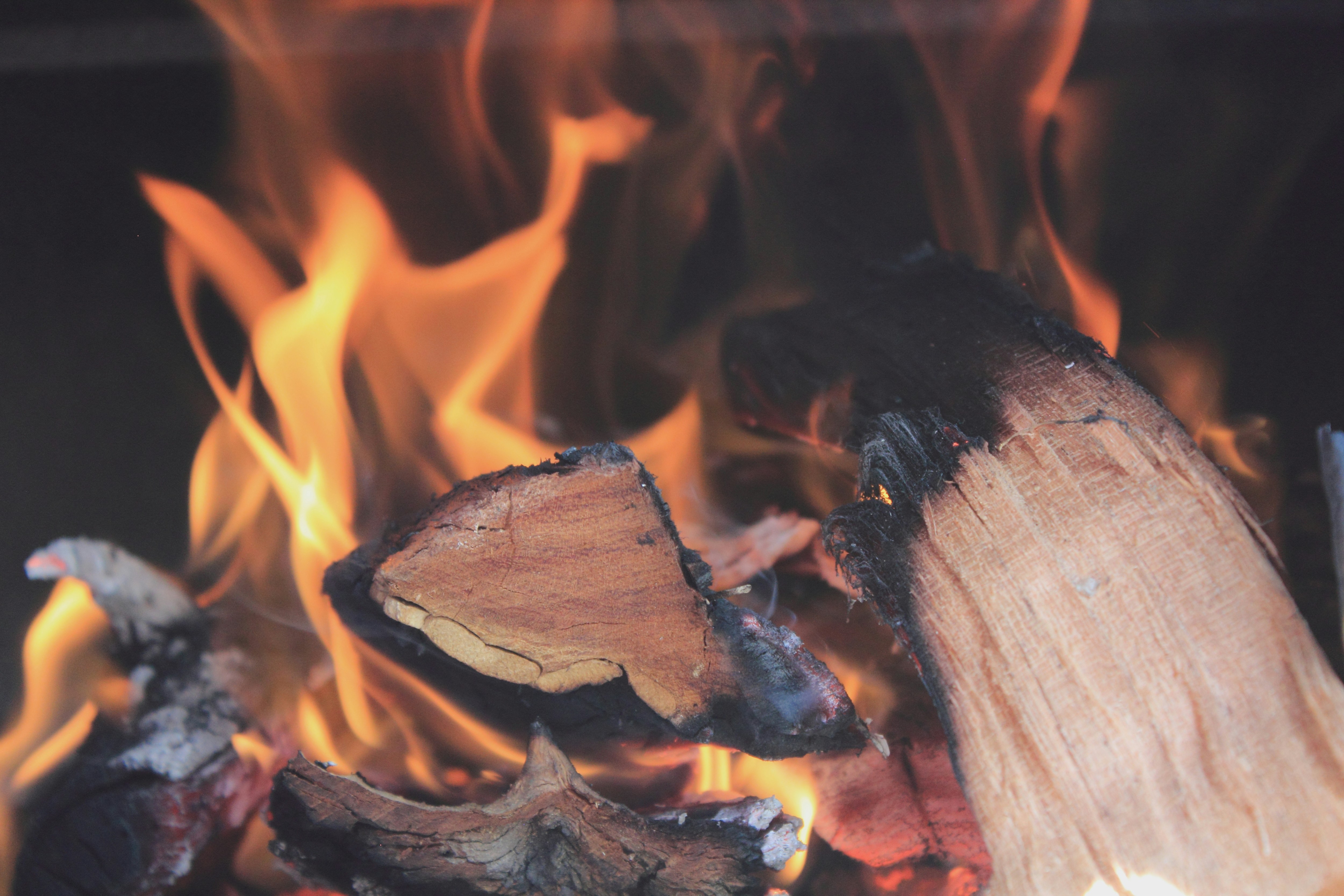
Life experiences are like collecting firewood. If a person’s outcome at a given moment could be evaluated, it would depend on how strong and expansive their “fire” is. This fire is influenced by factors such as the quantity and quality of firewood, ignition methods, stacking structure, and timing.
Based on this model, I propose three core ideas:
-
Over time, the amount of firewood a person collects does not decrease. Experiences remain in memory, even if they are not immediately accessible. The firewood is always there, even if it is not yet ignited.
-
In early life, we mainly collect firewood but lack the ability to ignite it. Before certain developmental stages, experiences do not easily translate into insight or usable knowledge.
-
We may not realize we are collecting firewood, but when a moment of realization occurs, the firewood ignites. That moment of sudden understanding transforms experience into meaningful knowledge.
In essence, experiences exist like unlit firewood. Only when they are ignited do they become active knowledge.
This perspective also helped me understand Wang Yangming’s “enlightenment at Longchang.” It was not a sudden miracle, but the ignition of accumulated firewood.
Expansion and Application
When we doubt our current efforts, we can interpret them as collecting firewood. The fire may not be visible yet, but the material is accumulating.
Efficiency varies. Some people constantly explore new experiences, while others repeat the same patterns. This suggests that stagnation may reflect a lack of new firewood collection.
Firewood also differs in type. Some are dry, some are wet, some are straw, and some are coal. Wet wood requires preparation before it can ignite. Coal, once ignited, burns long and steadily. These correspond to different types of experiences. Some insights emerge quickly but fade, while others take time but produce lasting impact.
Ignition is equally important. Firewood alone is not enough. Over time, external sources such as chance events, learning, or reflection can act as ignition. Learning can be seen as searching for ignition sources, while self-reflection is a way of generating them internally.
Sometimes we receive tools, like a lighter, representing techniques or structured knowledge. Occasionally, we receive a torch from others, guidance that helps ignite our understanding. However, not all external inputs are beneficial. Some resemble gasoline, producing intense but short-lived effects without truly igniting our own firewood.
This is why I emphasize critical evaluation of external influence.
The concept of privilege, which I encountered in my studies, also fits into this model. Some individuals are born into environments rich in both firewood and ignition sources. Their advantages are structural rather than purely personal.
Inference One
Outcome = Experience × Reflection × Luck (Luck ≈ 1, but variable)
Experience corresponds to firewood, reflection to ignition, and luck to external conditions. The multiplicative structure implies that if any factor is zero, the outcome is zero.
Some people have rich experiences but shallow reflection, resulting in limited impact. Others engage deeply in reflection but lack sufficient experience.
Luck plays a role, but in most cases, it approximates one. It modifies outcomes but rarely determines them entirely.
Inference Two
Teaching should focus on ignition, not on firewood.
Understanding something and being able to teach it effectively are fundamentally different.
When helping others learn, the focus should not be on how much firewood they collect, but on how to ignite it. This requires understanding their current state and guiding them from their perspective.
In practice, I have often found that experienced individuals fail to communicate effectively. Their responses are misaligned, incomplete, or dismissive. In contrast, effective teaching begins with understanding the learner’s position and providing explanations that are accessible.
The key is not demonstrating how much firewood one has, but explaining how ignition occurs.
Conclusion
This article outlines the core structure of the theory and its practical implications. It took a month to complete, and some parts may feel uneven due to interruptions.
I will continue to refine and expand it over time.
End.