Published
- 4 min read
Duku Cycling Journal
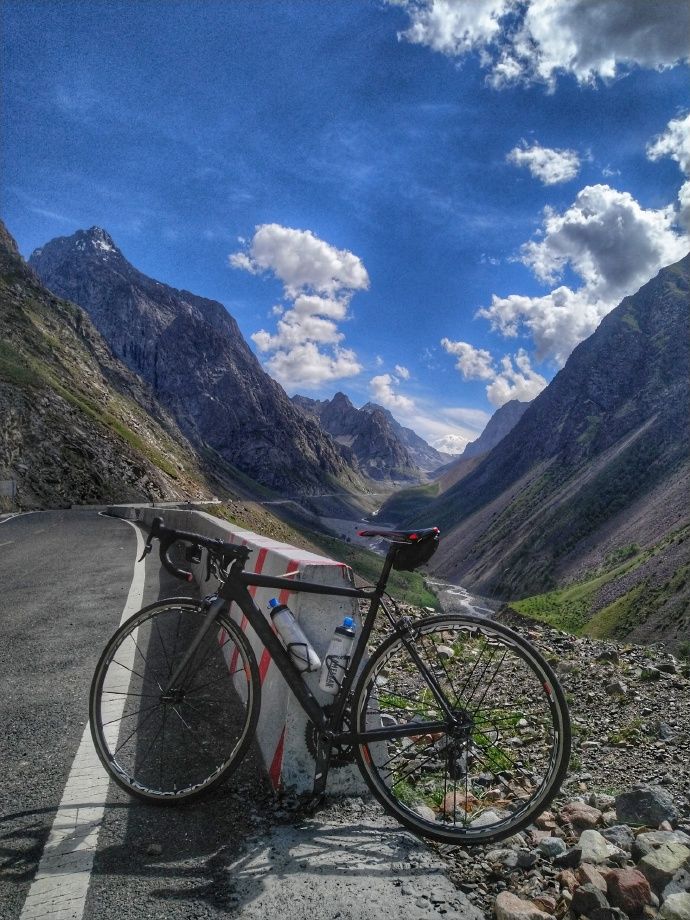
以下为等长语意翻译,保留原有结构与图片位置:
Note: This post was originally written on September 12, 2018 and published on Sina Weibo. It is being republished here as it is no longer accessible after the platform shutdown.
Introduction
I used to have a habit of writing regularly, but after Baidu Space shut down and for various other reasons, I stopped. Over time, however, I realized that many of the habits I developed from writing never really disappeared. When thoughts are not written down, I always feel something is unsettled. It reminds me of something I once wrote called a “Pensieve.” I wish I had one like Dumbledore’s, where I could place all my memories and thoughts—so they could be revisited and reflected upon.
This piece originates from a cycling trip along the Duku Highway at the end of July. Aside from the physical effort and the scenery, most of my time was spent thinking. After returning home, I shared a video of my route in a family group chat. My uncle said something I had once concluded myself:
“Travel and exploration are merely states of living. What truly changes you is not the journey itself, but the internal transformation that happens along the way.”
So what exactly was I thinking about during those long hours? Along the road, I tried to piece together those thoughts.
The Duku Highway stretches from Dushanzi to Kuqa, spanning 561 kilometers and connecting northern and southern Xinjiang. It cuts through mountains and valleys, linking multiple ethnic regions. Its construction reduced the travel distance between north and south Xinjiang from over 1,000 km to nearly half, making it a milestone in Chinese road engineering. Over ten years, tens of thousands of workers built it—168 of whom lost their lives.
Starting from Dushanzi, the road winds southward along the Kuytun River into the Tianshan Mountains. With cliffs on one side and rivers on the other, the terrain is extremely dangerous. One section, known as “Tiger’s Mouth,” is particularly perilous. Our ride began here, aiming to reach Qiaoerma in one day—130 km. I had heard that this segment was the most difficult, including two HC-level climbs and the Tiger’s Mouth section.
Departure
Despite preparing in advance—reviewing routes and elevation maps, asking about rest stops—the actual experience was entirely different.

Before departure, at the hotel in Dushanzi.

At the 0 km starting point. Everyone takes a photo here. I had mentally prepared for “survival mode,” and it showed.
From there, we followed G217 south. The starting marker read 555, which we used as a reference throughout the journey.
The first 20 km were relatively flat with a slight incline. However, having just eaten breakfast, I wasn’t in optimal condition. I usually avoid exercising within an hour of eating. Watching my companion disappear ahead, I knew chasing him would cost me later.

My heart rate peaked here, then stabilized around 150 bpm afterward.
This segment was supposed to be a warm-up, but it already consumed noticeable energy. After a short rest, the first climb began.
Kazikou to Pass
A 6 km climb at around 6% average gradient. Manageable in one push. Knowing a long descent awaited afterward made it mentally easier—though that assumption would later backfire.

After reaching the top, I descended 10 km. Descending is not as easy as it seems—braking tires your hands, maintaining posture strains your back, and prolonged forward weight distribution numbs your arms.
Toward 630
After the descent, I expected lunch soon. Instead, I encountered rolling terrain—more climbing than descending. When I reached a landmark crowded with people, I assumed it was the stop. It wasn’t.
Uncertainty began to set in.
I checked the map—still unclear. Hunger wasn’t the issue; uncertainty was. I rode several more kilometers, mostly uphill, stopping frequently. This short stretch became the longest psychologically.
Two emotions emerged: anxiety and regret. Anxiety from not knowing what lay ahead, regret for not noting details beforehand. These emotions compounded into frustration.
Then I forced a shift: frustration solves nothing. I needed to plan for worst-case scenarios—riding alone, rationing food and water, even considering stopping early. Once I defined the worst case, my mind stabilized.
The root of anxiety became clear:
-
No visible endpoint
-
No short-term achievable goal
Without these, every pedal stroke feels meaningless.
This led me to reflect on self-perception. We often think we are working hard—until we encounter those who are far beyond us. We think we are capable—until reality disproves it.
Running is a good example. A 5-second difference in a 100m sprint feels small—until you convert it into speed. Elite marathon runners maintain speeds far beyond what most people can sustain even briefly.
Cycling revealed the same truth. I once believed I was strong—until stronger riders passed effortlessly.
Environment matters. Reference points matter.
Eventually, a passing cyclist told me: “Your friend is waiting at 630.”
That single piece of information changed everything.
I had a destination.
Hope returned.
Soon after, I saw a milestone: 614.
Still 16 km away.
But now it was measurable.
Arrival at 630
With a clear target, riding became easier mentally. Though physically exhausted, I pushed through.
At 630, I finally arrived. Relief overshadowed hunger. After resting and a short nap, we continued.
Toward the Tunnel
The terrain grew steeper, scenery improved, and we reached the “Tiger’s Mouth.”


Steep cliffs, falling rocks, extreme exposure. No time to stop.
Hashilegen Tunnel


A dark 340m tunnel marked the peak.

Speed dropped, heart rate fell, and the gap to others widened.
Arrival at Qiaoerma
After the descent, cold and exhaustion set in. That night, despite interruptions, I slept deeply.
Return Journey
The next day reversed everything—climbs became descents. Knowing the route reduced uncertainty.
Encounters with others revealed something else: people often rationalize others’ achievements instead of reassessing themselves.
Self-deception is easier than self-awareness.
Postscript
The greatest takeaway was understanding my own limits—physically and mentally.
True self-awareness cannot be formed in comfort. It requires difficulty.
Another key realization: the impact of hope and clear goals on mental state.
These are not abstract ideas—they are lived experiences.
I close with a quote that gained new meaning through this journey:
You can’t connect the dots looking forward, you can only connect them looking backwards.