Published
- 6 min read
Games: What 20,000 Hours Gave Me

In traditional Chinese educational thinking, games are generally viewed more negatively than positively. Looking back at my own gaming history, although I never became a professional player or competed in tournaments, I estimate I have spent close to 20,000 hours playing.
This number is not arbitrary. In World of Warcraft, the only game where I had clear statistics, my total playtime once exceeded 370 days using the /played command. That means over 370 full days, 24 hours each, inside that world. At that time, I adopted a line I once read in a gaming magazine: I was not playing World of Warcraft, I was living in it.
After that, The Legend of Zelda: Breath of the Wild logged over 300 hours, and Tears of the Kingdom easily accumulated hundreds more. World of Tanks, though lacking precise tracking, likely took several thousand hours as well.
Seeing this total does not surprise me. I realized more than a decade ago that I had already crossed the ten-thousand-hour mark. But in a typical domestic educational context, this would immediately label me as someone “addicted to games.”
So here, I want to examine what this “addicted” middle-aged gamer actually gained.
Stage One: Experience
If we speak broadly of games, I cannot even recall when I first started. Narrowing it to video games, it was probably a console at my cousin’s home in the 1990s. From TV consoles to arcade machines, PC games, handhelds, and modern consoles, I have experienced them all.
But before 2016, even after more than ten thousand hours of gameplay, I would still classify my relationship with games as pure experience.
I was immersed, but I did not reflect. I never considered how games shaped my thinking.
What games gave me was a parallel world, similar to reality, yet offering freedom and a certain level of isolation. I remember when I first entered university, leaving Xinjiang for the first time and traveling far alone. After settling into the dorm and resting, the first thing I did was go straight to an internet café, reconnecting with something familiar in an unfamiliar environment.
Games also helped me build intuitive understanding of abstract concepts. Titles like Geometer’s Sketchpad, Crayon Physics, and World of Goo influenced my grasp of math and physics. In some moments, they even helped me avoid danger, possibly even saved my life.
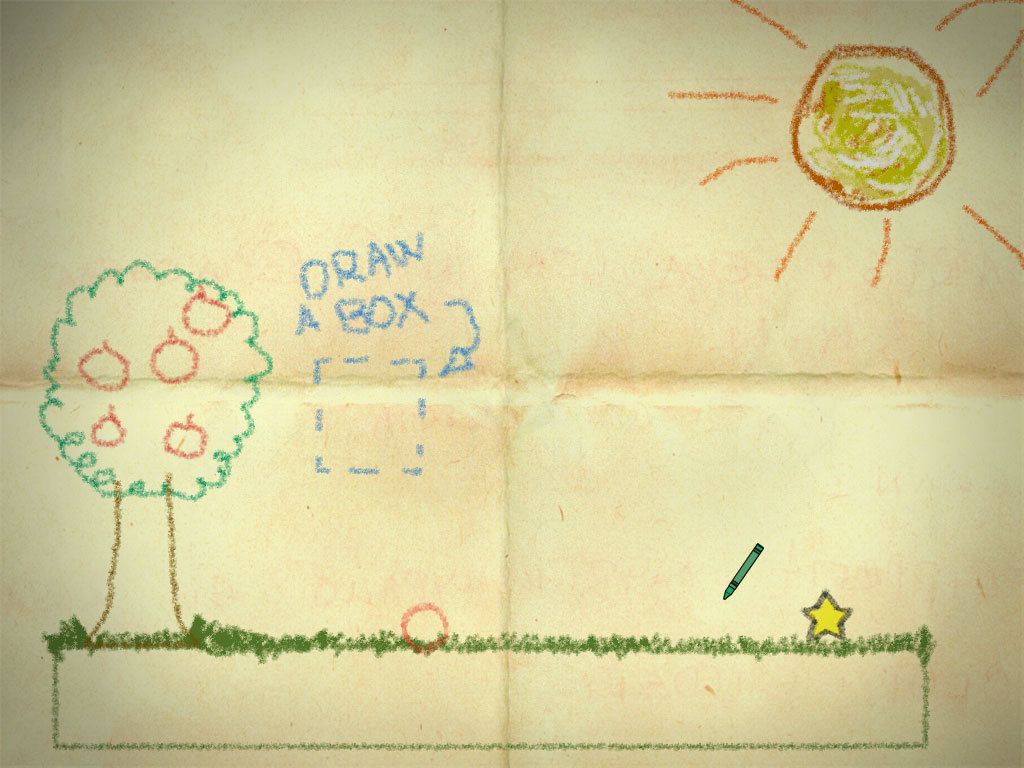
[Crayon Physics]
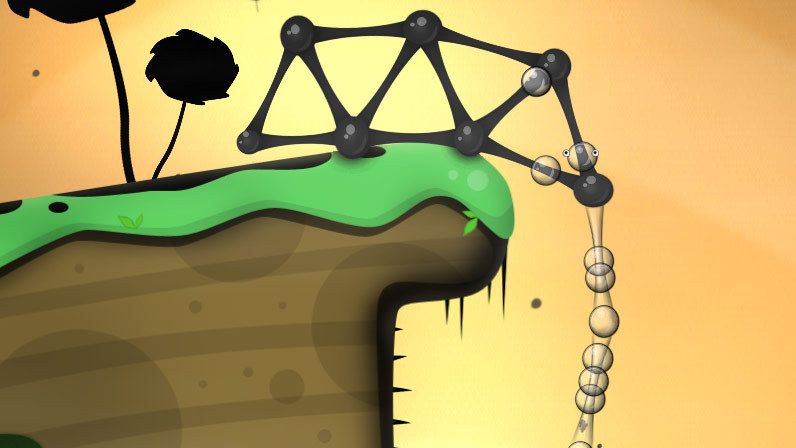
[World of Goo]
For example, in 2020, during a construction project in Guiyang, we needed to decide how to lift a material platform along with a climbing scaffold. The challenge involved force distribution and stability. Workers struggled to find a solution.
After understanding the situation, I improvised with bolts and managed to stabilize it.

[Diagram 1]

[Diagram 2]
Similar examples appear everywhere: driving on slippery roads, balancing heavy objects, and many forms of “intuition” that are actually grounded in internalized abstract understanding.
However, at this stage, I did not consciously analyze these influences. I simply benefited from them.
Two factors eventually pushed me beyond this stage:
First, my work began involving management. Assigning tasks, coordinating teams, and evaluating performance reminded me of leading raid groups in World of Warcraft. Strategy planning, role distribution, real-time coordination, and even loot allocation—all resembled management practices.
Second, around 2015, I stopped playing intensively due to work and exam preparation. This gap led to frequent recollections of past gaming experiences. These fragments triggered reflection.
This marked the transition to the next stage.
Stage Two: Mapping
In this stage, I began building mappings between games and reality.
As my real-world experiences expanded, I noticed increasing parallels. Game mechanics mirrored real-life systems.
For example, in World of Warcraft, drinking alcohol reduces perceived enemy level. In reality, alcohol reduces psychological pressure.
Reputation systems resemble loyalty programs. Crafting systems resemble industrial production chains. If A and B produce C, one can compare input costs and output value to find profit opportunities—just like recycling industries.
The difference from the previous stage is directional:
-
Experience: game → reality
-
Mapping: reality → game
This stage deepened my understanding of both domains. However, it remained largely about finding correspondences, not building structured reasoning.
That shift came later.
Stage Three: Systematic Thinking
World of Tanks marked the transition.
Unlike many games, its mechanics closely reflect real-world physics and strategy: armor angles, penetration mechanics, vision systems, positioning, and battlefield dynamics.
It was extremely difficult to learn. Unlike games that are easy to start and hard to master, this one was hard to even begin.
For a long time, I could not even be considered a beginner.
Performance is measured by “efficiency rating.” Below 400 indicates no understanding, around 600 basic familiarity, 800 competence, 1000 strong proficiency, and beyond that, increasingly high levels of mastery.
I initially aimed for 800. But driven by curiosity, I began deeper analysis: studying maps, tank parameters, and patterns.
At first, this approach failed. Pure pattern extraction could not handle dynamic battle conditions. I became confused.
Eventually, through watching replays, analyzing expert gameplay, and reviewing my own mistakes, I identified two types of principles:
Objective Rules
-
Use your strengths against the opponent’s weaknesses.
-
Combine tank characteristics with terrain advantages.
-
Maximize value within limited time and resources.
-
Optimize positioning, penetration, and survivability.
Subjective Judgments
-
Predict enemy movement based on composition and situation.
-
Recognize stalemates and wait for mistakes.
-
Understand human behavior and decision patterns.
Not every situation has an optimal solution. Some are unsolvable. This realization was critical.
This stage introduced systematic thinking, moving beyond isolated mappings toward structured reasoning.
Stage Four: Games and Life
Eventually, I began applying game-derived thinking directly to real life.
For example:
Advice from experts is not always useful if it does not match one’s current level—just like high-level players boosting low-level characters without transferring real experience.
Another example:
Effort does not always guarantee success. Some situations are inherently unwinnable. The key is avoiding such situations, not forcing solutions.
In one battle, I positioned correctly according to all known rules, yet was destroyed from multiple angles without counterplay. The conclusion was clear: the mistake was not execution, but entering that position at all.
In World of Warcraft, I once reorganized raid groups into small independent units. Each group handled its own tasks. This improved efficiency and coordination, similar to decentralized management models.
Later, I recognized parallels with business management concepts such as “amoeba management.”
Returning to beginner zones in games also revealed something important: achievement is not only about immediate feedback, but also about accumulated growth. Tasks that were once difficult become trivial.
This leads to a broader insight:
Achievement can emerge from the visible effects of accumulated experience, not just immediate rewards.
At this stage, games became more than a source of reflection. They became a framework for decision-making in life.
Even my decision to study abroad and pursue immigration was influenced, in part, by this accumulated way of thinking.
A battle lasts 15 minutes. Life lasts decades. Resources are finite. The goal is to maximize value within constraints.
Postscript
Friends have recommended games like EVE Online. I understand why. They likely gained similar insights from it.
However, at this stage, I no longer seek new game experiences. My focus has shifted to extracting meaning from past experiences and applying them to reality.
Games are only one component of my overall thinking system. But because they form a clearly bounded domain, they are easier to analyze and articulate.
If there is one final conclusion, it is this:
Experience is the repetition of history. Foresight is the application of experience.