Published
- 3 min read
Reflections on Labor
Note: This article was originally written on August 22, 2020, and published on Sina Weibo. As the platform is no longer accessible, it is now republished here.
Introduction
It has been four months since I changed jobs in May. During this period, I encountered a series of events that triggered extensive reflection. This piece is an attempt to整理 and structure those thoughts, focusing primarily on the topic of labor.
The discussion is divided into three parts:
- What I have observed over these four months
- Reflections on this group
- The impact of labor on my current work and the construction industry
Observations
Having grown up around construction environments, one phrase left a deep impression on me: “Quality first in a century-long project.” Early exposure, combined with several years working on construction sites, gave me a foundation for observing this group again from a different perspective.
Construction is a labor-intensive industry. There is frequent discussion about the shrinking demographic dividend and rising labor costs. Entering this field again, I also questioned whether labor shortages and aging workers would make such work increasingly difficult.
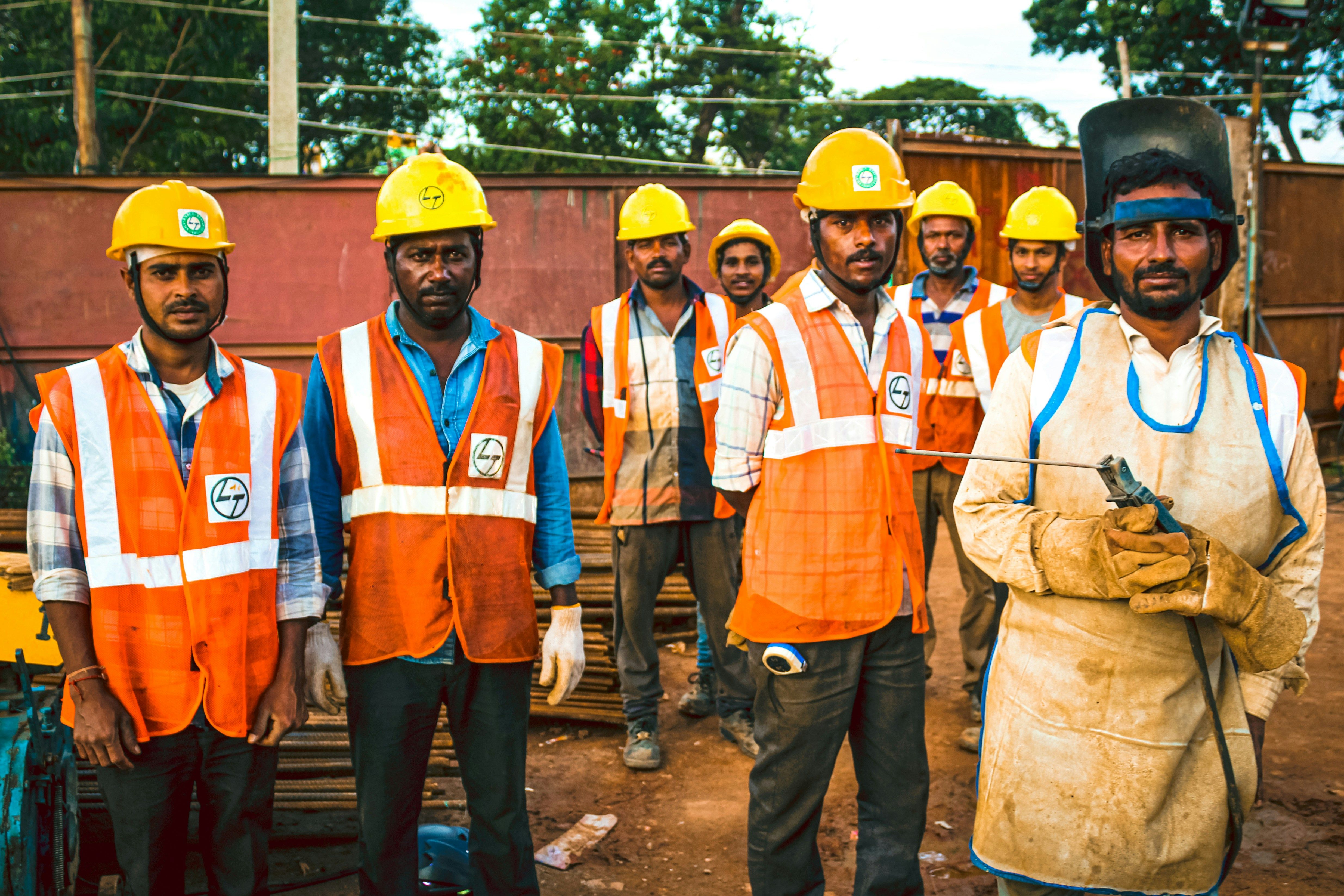
On May 20, we signed a project in Guiyang, and I arrived on-site with materials. Along with the materials came the labor crew.
- First team: led by Yang Er, same age as me, early 30s, relying entirely on physical labor
- Second team: led by Wang Anyu, experienced worker, brought his sons and long-time colleagues
- Later teams: younger leaders in their 20s, some working alongside their fathers
After interacting with dozens of workers, a clearer picture emerged across age groups.
Common Patterns
- Tendency to slack off
- Emotional instability
- Lack of deep thinking
- Weak problem-solving ability
- Poor delayed gratification
From one perspective, this reassured me: society does not lack labor willing to perform repetitive physical work.
From another perspective, it raised a deeper question:
What causes these shared traits?
Understanding the root cause is critical—not for judging others, but for preventing these patterns from appearing in myself and future generations.
Reflections on the Group
Many workers come in tightly bound social structures:
- Brothers
- Fathers and sons
- Childhood friends
- Long-term coworkers
Initially, this seemed normal. Over time, I realized the structural implication:
A fixed environment, over time, becomes a constraint.
The longer one remains within a closed social environment:
- The harder it becomes to exit
- The more one becomes a product of that environment
This connects directly to social class reproduction:
- Family background → determines accessible resources
- Time within that system → reduces mobility
A conversation with Wang Anyu revealed:
- His sons chose physical labor over education
- Even when education was accessible and affordable
This reflects a deeper mechanism:
Fear of the Unknown
Humans instinctively avoid uncertainty.
Familiar environments become comfort zones.
Breaking out requires confronting fear, effort, and lack of guidance.
Without effective guidance:
- New paths are avoided
- Existing patterns are reinforced
The Role of “Teachers”
“Teacher” here refers broadly:
- Parents
- Mentors
- Supervisors
A critical issue is how knowledge is transmitted.
A common phrase:
“How many times have I told you?”
This conveys:
- No actionable information
- Only frustration
The result:
- Learners withdraw
- Curiosity is suppressed
This mechanism explains many lost opportunities:
- Sports
- Subjects
- Skills
Conversely, positive teaching can ignite long-term engagement—even shaping careers.
Delayed Gratification
Delayed gratification is a decisive factor.
Classic behavioral experiments show:
- Children who delay rewards tend to achieve better long-term outcomes
In real life:
- Effort and results are often separated by long time spans
- Feedback is delayed
Example:
Preparing for professional exams feels like:
- Washing clothes in a dark room
- You only know the result when the light turns on
The key insight:
- Delayed gratification ≠ inactivity
- It often requires enduring discomfort intentionally
Misconceptions:
- Suffering is not the goal
- Growth is the goal
Observed issue:
- Many workers spend earnings immediately (gambling, drinking)
- Ignoring the effort required to earn that money
Implications for Myself
Two key takeaways:
- When guiding others, pay attention to language, tone, and attitude
- Cultivate delayed gratification as a core capability
Impact on My Work and Industry
Analysis of failed teams revealed a core issue:
Mismatch between compensation models
- Company → piece-rate
- Team leader → hourly wage
Result:
- Revenue fixed
- Costs variable and uncontrolled
Additional issues:
- Lack of problem-solving ability
- Inefficient methods
- Poor coordination
Example:
- Skilled workers: 3 people, 1 day
- Unskilled workers: 5 people, 3 days
Yet wages differ minimally.
Management Insight (Taylorism)
Frederick Taylor observed:
- Workers performing all steps individually → inefficient
- Specialization improves efficiency
Application:
- Divide work by task
- Assign based on strengths
- Increase productivity
Current issue:
- Teams operate as loosely organized groups
- No task specialization
- Low efficiency
Improved Approach
Recommended structure:
- Divide tasks clearly
- Assign responsibility by segment
- Introduce competition between teams
- Provide targeted training
- Separate critical tasks (e.g., pre-installation work)
On Contracting Models
Individual contracting can improve efficiency only when:
- Management processes are mature
- Standards are clear
- Execution is stable
Otherwise:
- Responsibility transfer leads to failure
On Compensation Design
Previous understanding was incomplete:
- Piece-rate advantages were clear
- But disadvantages were underestimated
Observed issues with piece-rate:
- Speed prioritized over quality
- Safety risks ignored
- Critical processes skipped
Example:
- Structural instability due to omitted steps
Root cause:
- Lack of alignment between incentives and desired outcomes
Management Principles
- Clearly define responsibility boundaries between processes
- Introduce competition, supervision, and evaluation
- Implement contracting only after management maturity
Closing
These reflections summarize my thinking over the past months.
Further areas under consideration include:
- Labor vs. AI
- Application of management theory in real operations
These will be explored in future writing.