Published
- 7 min read
How Time Shapes the Value of Information
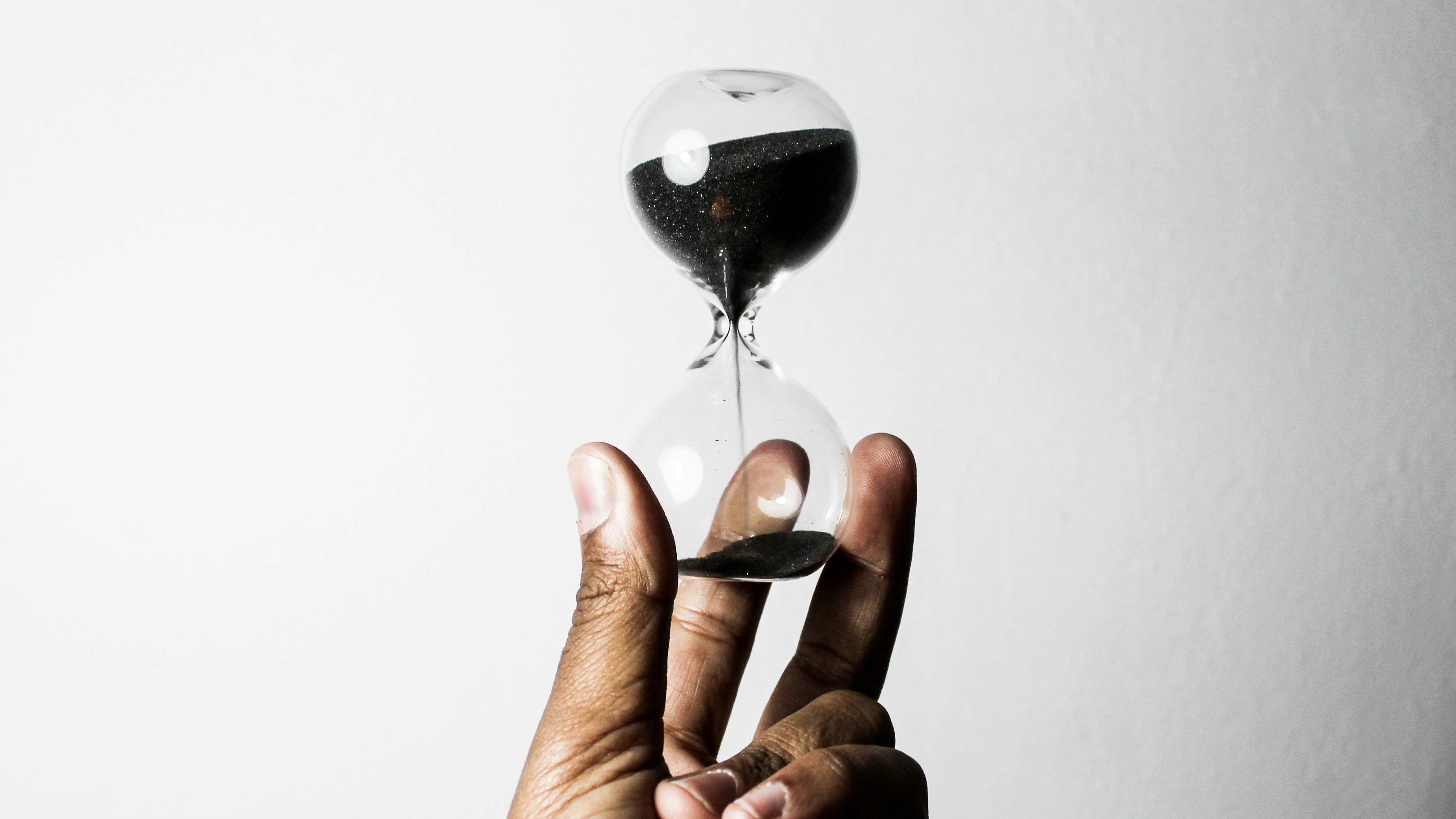
Preface
We all know that time affects the value of information. For journalists, learning about major events earlier and publishing them sooner means gaining a first-mover advantage, which translates into higher viewership, more traffic, and greater profit. In everyday life, people also gain initiative by knowing something earlier. Even gossip feels more engaging when it is shared firsthand.
But is there a possibility that, in some cases, the later information is released or shared, the greater its value or impact becomes? If so, what kind of information fits this pattern?
Childhood Memories
As a child, if I wanted to go out and play, I either had to sneak out without my parents noticing and return before being discovered, or I had to meet certain conditions, such as finishing homework or completing assigned tasks.
During weekends or long vacations, the situation was slightly different. Since there was more time and more homework, it was often measured by time rather than completion. For example, studying in the morning and playing in the afternoon, or playing only after studying for a certain number of hours.
Looking back, I now understand that for many parents at that time, homework was not primarily about reinforcing knowledge. It functioned more as a legitimate means to keep children occupied so that parents could have time for themselves. As a result, supervision focused less on the quality or outcome of the work, and more on the amount of time spent.
Parents were also aware of the flaw in this approach: time could pass without meaningful progress. Therefore, the decision to allow a child to go out and play often lacked clear objective criteria and relied largely on parental perception.
Let us consider three scenarios under the same weekend conditions.
Scenario One:
After school on Friday, no homework is done because there is no immediate deadline. On Saturday morning, little is accomplished, and in the afternoon, only about an hour of work is done. By evening, when asking to go out, the likely response is criticism: nothing was done yesterday, and now you want to go out? Even if the child argues that they worked both morning and afternoon, the result is still tension, and Sunday will likely bring similar restrictions.
Scenario Two:
Friday is the same, no work is done. On Saturday morning, the child genuinely studies for several hours. When asking to go out in the afternoon, the response may still be negative: just one morning of work does not justify playing all afternoon. The compromise might be limited time outside, followed by more work. Sunday remains restricted.
Scenario Three:
On Friday, the child pretends to study but actually does nothing, while appearing compliant. On Saturday, they stay home and do minimal work, without asking to go out. On Sunday morning, they study for a short period, still without making any request. At this point, simply lingering around the parents may lead them to assume that the child wants to go out, and they may allow it, because the child has not explicitly asked and appears to have been consistently “working.”
Across these scenarios, the actual amount of work done is not the key factor. The real variable is the perceived condition of “having been studying,” and how long that perception has been allowed to accumulate before making a request.
I believe that time does influence the weight of this perceived condition, and that its weight increases over time.
If we extend this over a longer period, such as a month, frequent negotiation, study followed by play, compared with less frequent negotiation but the same total amount of play, the latter tends to reduce parental resistance, even if the actual effort remains unchanged.
This phenomenon also appears in relationships.
If one person frequently emphasizes how much they have contributed, how much they care, and how much effort they have made, it often leads to resistance. Even genuine contributions may be discounted or produce negative effects.
In contrast, when no such signals are expressed for a long time, and only after years, or even decades, a consistent pattern of positive behavior is casually recognized, the impact is significantly stronger.
Consider this comparison:
“I stayed up for three days and nights to make this for you, exhausting myself completely. Do you like it?”
Now imagine the same information revealed thirty years later:
“Do you remember that thing I gave you thirty years ago? I stayed up for days to finish it. A lot was happening at the time, but I focused entirely on completing it. I am glad you liked it, or maybe you didn’t. It does not matter now.”
The event is the same. The content is similar. The difference lies in impact.
In these situations, the same type of information, “something was done,” can have opposite effects depending on timing. The earlier it is expressed, the more it may backfire. The later it is revealed, the greater its influence.
Some stories are even buried for a lifetime and only revealed after the person’s death. Their impact is often profound.
Recording Painful Experiences
This year, I have once again been facing major challenges in life. During moments of deep frustration, I have noticed something unexpected: any attempt to share or communicate these experiences, even the impulse to do so, makes me feel worse.
This discomfort is not simply the amplification of the hardship itself. It feels more like a subtle sense of being dismissed.
These experiences are complex, layered, and dynamic, shaped by multiple factors across different dimensions. To fully convey them to someone outside the situation would require extensive explanation. They cannot be reduced to a brief summary.
If they could be explained in a few sentences, they would not carry such weight. The very complexity that makes them difficult to endure also makes them difficult to communicate.
The more I try to explain, the more trivial these experiences seem when expressed, as if they were just a collection of simple events. But internally, I know they are not.
I am capable of explaining them in detail, but even I grow tired in the process and lose the desire to speak. This is not a lack of willingness to express, but a reluctance to transmit.
If I speak only to myself, I find it easier.
So I began recording videos for my future self, alone, in a quiet place.
The last time I did this was in September 2023, while preparing for the IELTS exam. My emotional state fluctuated sharply. Sometimes I could answer a difficult passage perfectly, and shortly after fail a simple one.
One night, overwhelmed, I recorded a forty-minute monologue.
Later, after passing the exam and no longer experiencing the same level of struggle, I revisited that recording. The feeling is difficult to describe, but it brought relief.
Not because the pain had disappeared, but because it confirmed that the struggle had been real. The intensity had been real. It prevented me from reinterpreting past pain as something insignificant simply because I had moved beyond it.
The recording serves as evidence: the difficulty I overcame was genuine, not something I imagined.
This reflection led me to realize that when painful experiences are treated as information, their impact grows over time. The longer the delay, the greater the sense of meaning, even a sense of achievement.
Sometimes I imagine that one day, when I am nearing the end of life, I will look back on these recorded experiences and feel that my life was full, that I did not waste it.
Wine or Cola
Sharing pain in real time, or seeking comfort immediately, often feels performative.
It may be better to let it settle, to allow time to transform it, and then revisit it later, experiencing the depth that only time can create.
Through these moments of self-recording, I have found another way to process emotions. I can document my genuine feelings without restraint. I can express my thoughts about people and events freely.
And I still remember a sentence:
The things that once caused unbearable pain will one day be spoken of with a smile.