Published
- 9 min read
Under Patriarchy, No Gratitude Is Owed
Preface
This is a heavy topic. I had been preparing for it and thinking about it for a long time, yet I kept delaying the moment of writing.
On one hand, my own thinking has been continuously evolving. Each time I felt that my understanding had become sufficiently complete and thorough, something new would happen that forced me to revisit it from a deeper level. On the other hand, I am fully aware that publishing an article like this will offend people who have real influence over my life.
I still chose to write it, because I have reached a point where I have nothing left to lose, and therefore nothing left to fear.
In fact, during my childhood and youth, my family environment did not give me a strong sense of being controlled. My parents consistently respected and supported my thoughts and choices. It was only after I started working in 2011 that this sense of being controlled gradually emerged.
What is more interesting is that when I later sat down and carefully examined the source of this feeling, I realized that it had never come from my father, who was always straightforward in personality.
The sense of control I am describing is something diffuse, something that surrounds me at all times, permeating every breath I take. It brings a persistent pressure and a feeling of suffocation. I cannot fully relax. I cannot find an environment that feels absolutely safe. Whenever I try to resist it, I only feel a deeper sense of powerlessness.
This feeling was not something I could identify or articulate from the beginning. For a long period of time, nearly ten years since 2011, I could sense its existence, but I could not explain it. I could not even determine whether it was a problem within myself.
It was not until 2022 that I gradually began to awaken. I encountered philosophers whose ideas carried the clarity of human thought, and they articulated, with precision, the very confusion I had been unable to express.
Resistance to Being Treated as an Asset
The force that imposed this sense of control on me was not constant in intensity, nor did it increase uniformly over time. If there is a strongly correlated factor, I would say it is my ability to create value, my capability, and the position I occupy.
Why is that?
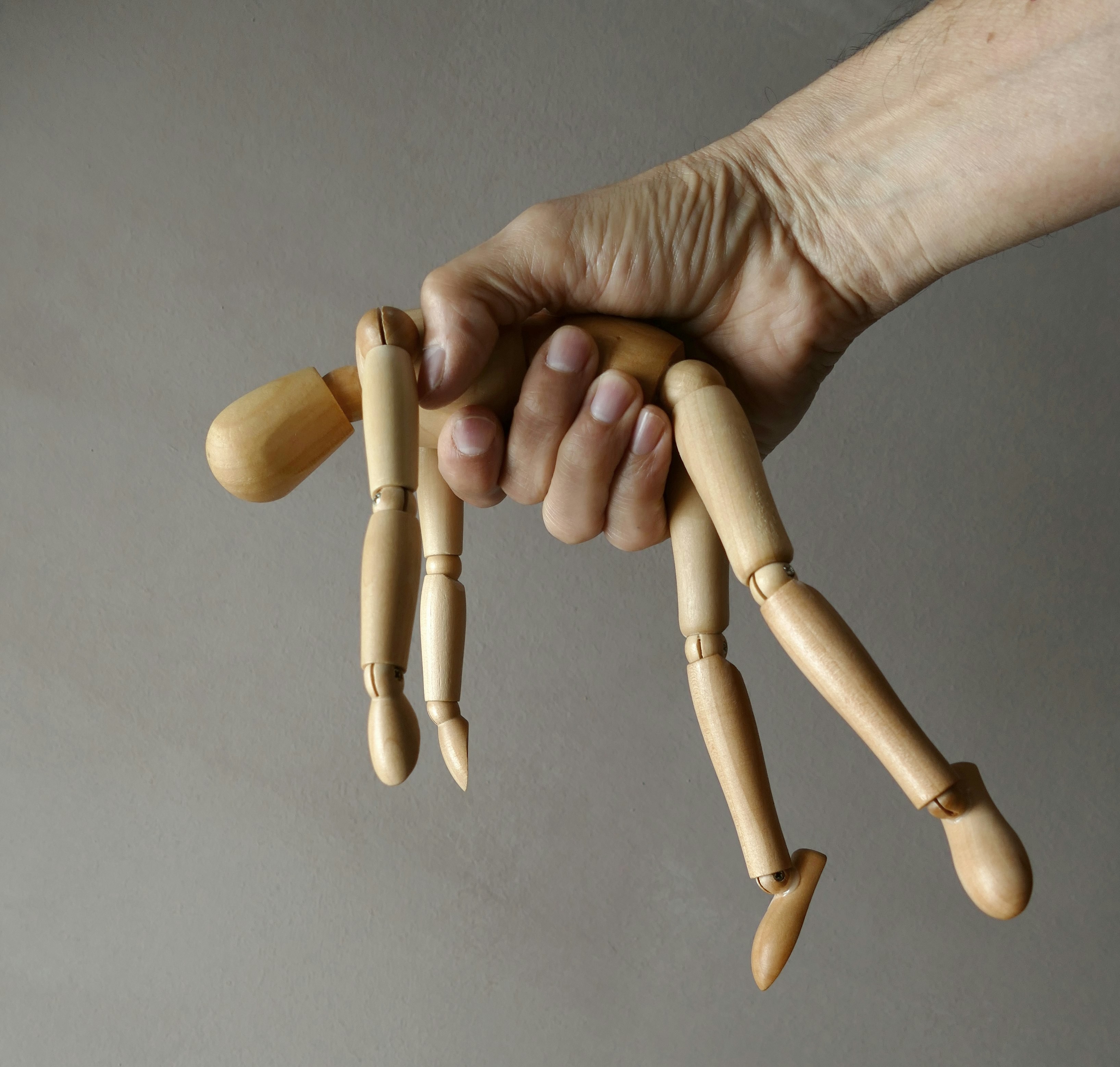
Because once I began to think of myself as an “asset,” the feelings I could not previously describe started to become logically coherent.
At the beginning, when my “asset value” was low, controlling me did not produce meaningful gains for the controller. But as I grew, as my capabilities improved, and as the value I could create increased, the value of this “asset” rose accordingly. With that, the force of control I experienced became stronger.
You may argue that I am overestimating myself. I acknowledge that perspective, but I do not accept it. I can justify, from multiple angles, why I reached the conclusion that I am treated as an asset.
If my awakening had only occurred within the environment I came from, it might have remained a subjective realization, something I “felt” but could not verify. However, my experiences in Canada, along with my interaction with AI, allowed me to recognize that these thoughts are not only valid, but also supported by broader theoretical frameworks.
So why describe it as an asset?
From an accounting perspective, assets possess several defining characteristics:
-
Assets have value, and that value may appreciate or depreciate over time.
-
Holding high-quality assets generates returns, though holding them may also require cost.
-
The holder expects the asset to appreciate.
-
When ownership is clear and stable, the holder will manage the asset carefully and even take actions to increase its value. When ownership is uncertain, the holder will attempt to secure control first.
-
If ownership and duration cannot be secured, the holder will abandon the asset, and may even destroy it, whether for profit in future transactions or for psychological satisfaction.
What I describe as “resistance to being treated as an asset,” what I call my awakening, corresponds precisely to what Carl Jung referred to as the process of individuation: the formation of an independent self inevitably involves conflict with, and detachment from, existing authority structures.
If we anthropomorphize an asset, then under these conditions, the experiences it undergoes align almost perfectly with my own.
One might assume that these experiences belong solely to my professional life. They do not. Within a cultural environment shaped by patriarchal dominance and feudal patronage logic, these patterns also exist within family relationships.
To further clarify my perspective, I analyze the forms and logic of control.
First, the controller must establish a framework of ideas that appears logically sound and difficult to challenge. In family contexts, such frameworks often manifest as:
-
“Your body and life come from your parents.”
-
“Blood ties are sacred.”
-
Hierarchical authority based on seniority.
-
“It’s for your own good.”
“No Inherent Parental Debt”
Based on these frameworks, especially those rooted in Confucian traditions, many forms of control that appear reasonable are, in fact, deeply flawed. I state my position clearly: I support the view that there is no inherent “debt of gratitude” owed to parents.
Before rejecting this idea, one must fully understand what it actually means.
Do parents inherently deserve gratitude for raising a child?
My answer is: only if they truly raised the child.
Growth is a natural process, not a gift bestowed by humans. A tree grows as long as it has sunlight and water. The same applies to humans. Many children survive, even in neglectful or abusive environments, driven by instinct alone. Survival itself does not constitute a debt.
True upbringing means enabling a person to become a better version of themselves. It involves respect, protection, nurturing, and guidance, rather than suppression, control, and emotional manipulation.
As Alice Miller argued in The Drama of the Gifted Child, many so-called forms of parental love conceal unconscious control and projection. The cost of being a “good child” is often the suppression of the self and becoming a vessel for parental expectations.
If upbringing becomes a tool for control, then it is no longer a gift, but a mechanism.
So I say: food allows me to grow, but it does not automatically obligate me to feel gratitude. I appreciate nature, which allows nourishment to be absorbed. I appreciate any action that genuinely respects me as an individual. But I reject forced gratitude, especially when it is used as a means to demand silence, obedience, or the surrender of one’s identity.
It is actions that define gratitude, not relationships or outcomes.
Philosophically, this aligns with the critique of the naturalistic fallacy: one cannot derive moral obligation from natural facts.
Patriarchal Logic and Feudal Patronage
The concept of hierarchical authority further distorts reasoning.
If we remove hierarchy and discuss ideas anonymously, the validity of arguments can be evaluated based on their merit. But once hierarchy is introduced, logic becomes distorted. Correctness is no longer determined by reason, but by status and seniority. The younger must obey the older, or be labeled as rebellious.
Psychologically, this system manifests as:
-
Conditional acceptance: you are only worthy if you conform.
-
Debt-based control: giving is used to create a moral obligation for future control.
-
Projection-based dominance: disagreement is interpreted as wrongdoing.
Philosophically, this stands in direct opposition to Enlightenment thought. Kant’s ethical principle is clear: human beings must always be treated as ends in themselves, not as means to an end.
Looking back after my awakening, I find it almost absurd. My father never controlled me in this way, yet I felt as if everyone else was trying to assume that role.
What I reject is a form of dominating ethics disguised as gratitude.
Hypocrisy in “Help”
This domination extends beyond relationships and emotions. It evolves into a structure based on “help.”
When I need help, or when I ask for it, the figure of the “savior” appears, imposing an expectation of submission in return for assistance.
I am not arguing that help carries no value. Rather, I argue that help must not become a tool of coercion.
If help requires submission, then it does not treat the recipient as an equal individual. It lacks respect.
If survival requires kneeling, then it is no longer living, but existing as a controlled entity.
In my view, once help carries conditions, it ceases to be help and becomes a transaction. And if it is a transaction, then both parties are equal. I can accept or reject it freely. I should never be forced into it.
Yet conditional help often operates differently. It demands submission, followed by an expectation of gratitude.
Much of what is called “help” is not driven by care, but by a desire for superiority. Giving becomes a way to dominate another person’s life. Gratitude is demanded because the giver believes the recipient depends on them for survival.
Conclusion
I once expressed an extreme thought: if I must live under control, could I choose to end my life? If I choose not to live, would control still apply?
I believe that the fundamental purpose of living is to preserve one’s independent will.
Even in poverty, even in hardship, I will retain freedom of thought, the right to choose, and the courage to reject humiliation.
I do not need anyone to “grant” me a livelihood. My labor, my thinking, and my effort are exchanges I am entitled to, not favors bestowed upon me.
This path of awakening is lonely. But I know I am not alone.
If you have ever felt trapped by imposed gratitude, if you have been asked to thank those who harm you, if you have been punished for refusing to submit, then understand this:
You are not wrong.
What is wrong is a system of rules that cannot be falsified and exists only to benefit those in control.
I hope that one day I can stand freely in this world, earn a dignified place, and live without dependence, without flattery, and without humiliation.
No matter the cost, even if I must start from nothing, I will continue.
Because I now understand:
A human being is not a tool, not an asset, not an appendage, but an end in itself.
This is the belief I forged through pain, and the final conviction that keeps me from kneeling.