Published
- 3 min read
Where Transformation Comes From, and How It Is Witnessed
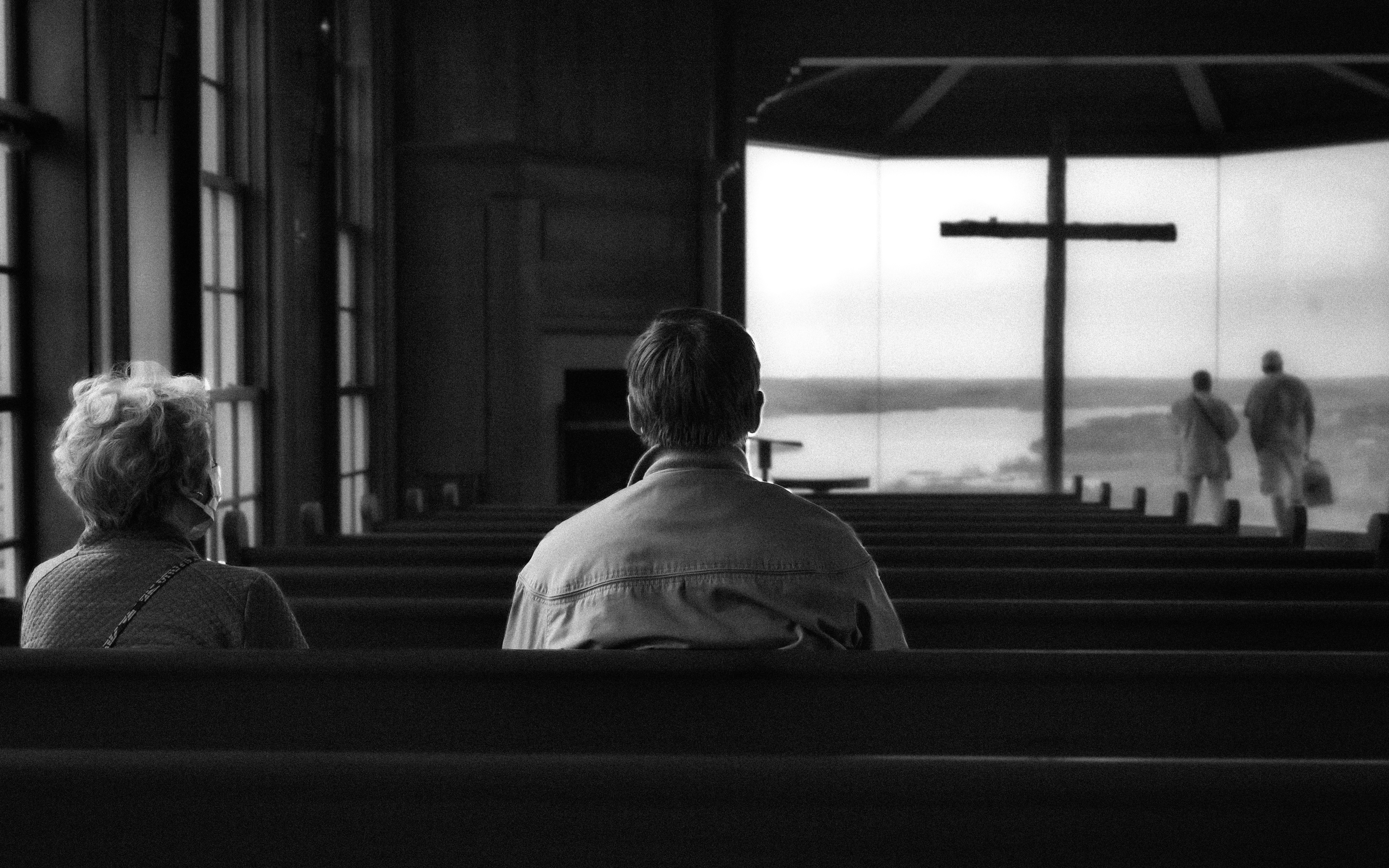
Last Sunday, I listened to a sermon on Acts and the Ascension. Afterward, I had a brief conversation with the speaker, during which I mentioned a word that had stayed with me through the whole service: witness. Over the following days, I kept turning it over, and eventually arrived at two connected questions: why do people change? And after change, how is faith actually lived out?
Why Do People Change?
In Chinese Buddhist culture, there is a well-known phrase: 放下屠刀,立地成佛. Roughly translated, it means “lay down the butcher’s knife, and you become a Buddha on the spot.” It is typically used to encourage someone who has done wrong: stop now, and redemption is immediately within reach. Looking back at it, I realize this expression is really describing a result — a sudden, complete transformation. The entire saying rests on that description of outcome. But it never actually explains: why would a person change? And what force makes that change possible?
In the education I received growing up in China, the framework for understanding change was consistently inside-out. We were literally taught that internal causes are greater than external ones, and that internal factors play the decisive role. So for most of my life, I understood change as something a person arrives at through reflection, reasoning, and inner breakthrough — something you work out on your own. That logic sounds compelling. But things that have actually happened in my own life don’t fully fit it.
What Luke seems to be emphasizing in Acts is not how a person figures it out on their own, but how a person — under the influence of something from outside themselves — gradually becomes open, and is slowly changed.
This resonates with my own experience.
For many years, I carried a strong sense of defensiveness. I was used to questioning whether other people’s kindness came with conditions, and to protecting myself first before deciding whether to trust. Even after entering a new community, I spent the early period in a mode of observation and guardedness.
At some point, someone said something to me — the gist of it was: “If a person has never truly been loved unconditionally, how could they ever learn to love others unconditionally?”
That landed very deeply. I realized that some kinds of change don’t happen through logical reasoning — they happen through experience. Many things, people already know in their heads. But it is only when something is actually experienced that certain parts of a person that have been closed for a long time begin to loosen.
This is how I have started to understand the Holy Spirit — at least for now. Not as an abstract religious concept, but as a kind of force that gradually breaks through old habits, old defenses, old ways of existing. And that force, I think, often enters a person’s life through relationship, community, love, acceptance, and genuine connection with others.
Maybe change was never something a person sits down and figures out. Maybe it happens in the process of becoming willing to open — being carried along by something you cannot fully explain.
After Change, How Is Faith Lived Out?
If change itself is not something we accomplish on our own, then perhaps the way of living that follows also operates according to the same logic.
This brings me back to that word: witness.
In Chinese, 见证 is primarily felt as a verb, with the subject located outside oneself. To witness something means to stand at a third-party position, observe, and confirm that it happened. The relationship between that kind of witnessing and myself is indirect — I am a bystander, not a participant.
But in that sermon, witness functioned as a noun. To be called to be a witness is not to perform the act of witnessing — it is to be the witness yourself.
This distinction matters to me.
If witness is a verb, I can maintain distance. I saw it, I recorded it, and I go on with my life. But if witness is a noun, there is no distance left to maintain. My entire existence — the way I live, the relationships I keep, the way I treat people — becomes the evidence itself. Not proving something to others, but my existence simply bearing witness.
Putting these two reflections together: maybe real change is not transmitted through arguments or explanations, but through the presence of a person who has actually been changed. A person who has truly been changed — their existence is itself the best witness. No performance required. Nothing to prove to anyone.
Closing
I am not certain either of these reflections is theologically precise, and I hold them with some openness. But they describe something that feels true to what I am living through: a shift from “figuring it out on my own” to “being willing to be carried,” and from “witnessing something” to “becoming the witness itself.”
These two things are, I think, two faces of the same logic. How transformation happens determines what kind of person you become after it.
What do you think?